Everything You Need to Know About Auto Glass: The Complete Guide
Pomona Mobile Auto Glass created this auto glass wiki as a practical reference for vehicle owners who want to understand how modern automotive glass is designed, manufactured, repaired, replaced, and integrated with today's vehicle safety technologies. Auto glass is no longer just a transparent barrier that provides visibility.
It has become an engineered safety component that contributes to vehicle structural strength, occupant protection, airbag performance, weather sealing, and Advanced Driver Assistance Systems (ADAS). Whether you drive a passenger car, SUV, pickup truck, commercial vehicle, RV, or semi-truck, understanding auto glass helps you make informed decisions when damage occurs or replacement becomes necessary.
On This Page
01What Is Auto Glass?
Auto glass is specially manufactured safety glass engineered for use in motor vehicles. Unlike standard residential or commercial glass, automotive glass is designed to withstand road vibration, temperature fluctuations, flying debris, and collision forces while maintaining optical clarity and meeting strict automotive safety standards.
Modern vehicles use different types of automotive glazing depending on the location and purpose of each glass component. Windshields are manufactured from laminated safety glass to improve occupant retention and structural support, while most side windows and rear glass use tempered safety glass that breaks into small rounded pieces during severe impacts. Every glass component contributes to the overall safety, comfort, and functionality of the vehicle.
Why Auto Glass Is Important
Modern auto glass performs several critical functions that extend well beyond providing a clear view of the road. Properly installed automotive glass supports vehicle safety systems and helps protect occupants during everyday driving and collision events.
Auto glass helps:
- Maintain structural rigidity during front and side impacts.
- Support roof strength during rollover accidents.
- Assist proper passenger airbag deployment.
- Protect occupants from wind, rain, dust, and road debris.
- Reduce outside noise through acoustic glass technology.
- Filter harmful ultraviolet (UV) radiation.
- Provide mounting locations for ADAS cameras and sensors.
Main Types of Automotive Glass
Most modern vehicles use two primary categories of safety glass.
Laminated safety glass is primarily installed in windshields because it remains bonded together after impact.
Tempered safety glass is commonly used for side door glass, rear glass, quarter glass, and vent glass because it fractures into small rounded fragments that help reduce injury risk.
02Types of Auto Glass
Every piece of automotive glass is engineered for a specific purpose. Together, these components provide visibility, passenger protection, weather resistance, vehicle security, and support for modern driver assistance technologies.
Windshield (Windscreen)
The windshield, also known as the windscreen, is the largest glass panel on most vehicles. It is manufactured using laminated safety glass consisting of two glass sheets permanently bonded with a Polyvinyl Butyral (PVB) interlayer. This construction helps the windshield remain intact after impact, improving occupant protection and supporting vehicle structural integrity.
Many modern windshields also incorporate acoustic insulation, solar control coatings, rain sensor mounting areas, heated elements, Heads-Up Display (HUD) compatibility, and integrated camera brackets used by ADAS systems.
Side Door Glass
Side door glass is typically manufactured from tempered safety glass. The tempering process significantly increases glass strength while ensuring the glass breaks into small rounded pieces instead of sharp shards if damaged. Many modern vehicles also offer laminated side glass for improved security and reduced road noise.
Rear Glass (Back Glass)
Rear glass, often called back glass, provides rearward visibility while protecting the passenger compartment from weather and road debris. Rear windows frequently include integrated defroster grids, radio antennas, rear-view camera mounting points, or rear windshield wipers depending on the vehicle design.
Quarter Glass
Quarter glass refers to the smaller stationary glass panels located behind the rear doors or adjacent to cargo areas. These panels improve visibility, increase cabin lighting, and complement the overall vehicle design while maintaining weather protection.
Vent Glass
Vent glass is a smaller glass panel positioned near the front side windows or door mirrors. Although less common on many newer vehicles, vent glass remains widely used on commercial trucks, classic vehicles, and specialty applications where additional visibility or ventilation is beneficial.
03Auto Glass Materials
Modern automotive glass combines specially engineered glass with advanced interlayers and protective coatings to deliver strength, durability, optical clarity, and safety. Each material contributes unique properties that improve vehicle performance and occupant protection.
Laminated Glass
Laminated glass consists of two sheets of glass permanently bonded to a transparent Polyvinyl Butyral (PVB) interlayer using heat and pressure. When damaged, the interlayer helps hold broken glass together, reducing the likelihood of occupant ejection while maintaining a protective barrier against wind and debris.
Because of these safety characteristics, laminated glass is the standard material used for vehicle windshields and is increasingly found in premium side window applications.
Tempered Glass
Tempered glass is manufactured by heating the glass to extremely high temperatures before rapidly cooling its surfaces. This thermal treatment significantly increases strength compared to untreated glass.
If breakage occurs, tempered glass fractures into thousands of small rounded fragments rather than dangerous sharp pieces. This characteristic makes tempered glass the preferred material for side windows, rear glass, quarter glass, and vent glass.
Polyvinyl Butyral (PVB)
Polyvinyl Butyral (PVB) is the transparent plastic interlayer used in laminated windshields. The material absorbs impact energy, improves optical clarity, filters ultraviolet radiation, reduces noise transmission, and helps retain broken glass after collisions.
Without the PVB layer, laminated windshields would lose much of their structural and occupant protection capabilities.
Modern Auto Glass Features
Modern automotive glass incorporates technologies that improve driver comfort, visibility, and compatibility with electronic safety systems.
Common features include:
- Ultraviolet (UV) protection
- Solar heat-reducing coatings
- Acoustic noise reduction
- Heated windshield technology
- Rain sensor compatibility
- Light sensor compatibility
- Heads-Up Display (HUD) support
- Hydrophobic water-repellent coatings
- GPS and radio antenna integration
- ADAS camera mounting brackets
04Windshield (Windscreen)
The windshield is one of the most important structural components of a modern vehicle. In addition to providing clear forward visibility, it supports roof strength, contributes to passenger compartment stability, and serves as the mounting platform for many Advanced Driver Assistance Systems.
As automotive technology continues to evolve, windshields have become an integral part of vehicle safety rather than simply a piece of protective glass.
Windshield Layers
Modern windshields are constructed using multiple bonded layers designed to improve strength, safety, and durability.
Outer Glass Layer. The outer layer provides impact resistance against stones, road debris, weather, and daily driving conditions while maintaining optical clarity.
Polyvinyl Butyral (PVB) Interlayer. The PVB interlayer permanently bonds both glass panels together, absorbs impact energy, blocks ultraviolet radiation, and helps prevent glass separation after damage.
Inner Glass Layer. The inner glass layer faces the passenger compartment and completes the laminated construction, contributing additional strength and passenger protection.
Types of Windshields
Vehicle manufacturers use different windshield designs depending on vehicle equipment and safety technology.
Common windshield types include:
- Standard laminated windshields
- Acoustic windshields
- Heated windshields
- Solar control windshields
- Heads-Up Display (HUD) compatible windshields
- ADAS-ready windshields with integrated camera mounting systems
Selecting the correct windshield ensures compatibility with factory-installed safety systems, electronic equipment, and manufacturer specifications.
Common Windshield Damage
Windshields are constantly exposed to flying debris, weather conditions, road vibration, and temperature changes. Damage varies in severity, and not every defect requires complete replacement.
Common types of windshield damage include:
- Stone chips
- Bullseye breaks
- Star breaks
- Combination breaks
- Surface pits
- Stress cracks
- Long cracks
- Edge cracks
The size, depth, location, and severity of the damage determine whether professional windshield repair is possible or whether complete windshield replacement provides the safest long-term solution.
05Auto Glass Repair & Replacement
Auto glass damage ranges from minor stone chips to extensive cracks and shattered panels. Selecting the correct solution depends on the type of glass, the location and size of the damage, and whether the structural integrity of the glass has been compromised. Professional technicians evaluate the condition of the damaged glass before recommending repair or replacement.
When Auto Glass Can Be Repaired
Windshield repair is often possible when damage is limited and the structural integrity of the laminated glass remains intact. The objective of repair is to stabilize the damaged area, restore visibility, and help prevent further crack propagation.
Common repairable damage includes:
- Small stone chips
- Bullseye breaks
- Star breaks
- Combination breaks within repairable limits
- Short cracks that meet repair guidelines
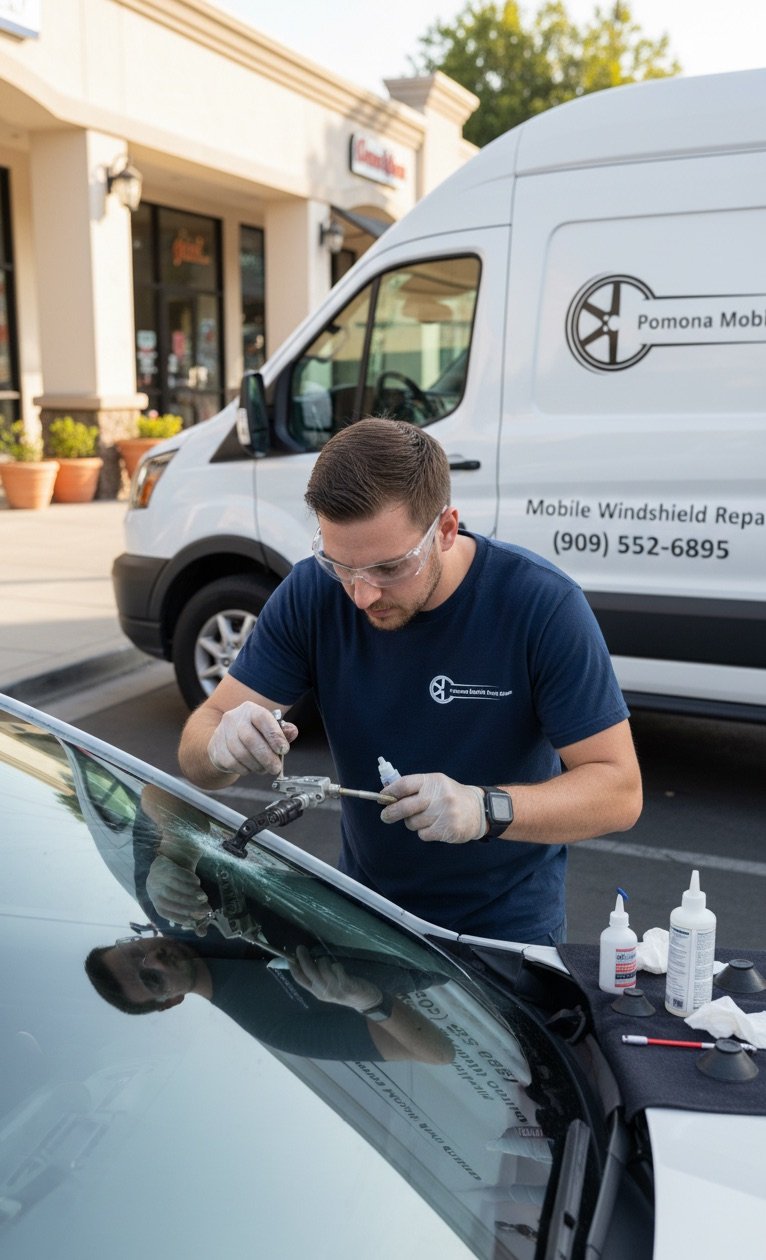
Modern windshield repair uses vacuum and pressure technology to inject specialized resin into the damaged area. Once cured with ultraviolet (UV) light, the resin bonds with the glass and improves both structural stability and optical clarity.
When Auto Glass Should Be Replaced
Replacement becomes necessary when damage affects the structural performance or safety of the glass. Large cracks, extensive impact damage, shattered tempered glass, or damage located in critical viewing areas often require complete replacement.
Auto glass replacement may be recommended when:
- Cracks extend beyond repair limits.
- Damage reaches the windshield edge.
- Multiple impact points weaken the glass.
- Laminated glass begins to delaminate.
- Tempered side or rear glass is shattered.
- The driver's primary viewing area is significantly affected.
Modern windshield replacement involves removing the damaged glass, preparing the pinchweld, applying automotive-grade urethane adhesive, installing the replacement windshield, and allowing the adhesive to achieve the manufacturer's Safe Drive Away Time (SDAT) before normal vehicle operation.
Auto Glass Repair Tools & Techniques
Professional windshield repair combines specialized equipment with controlled repair procedures to restore damaged laminated glass.
Common repair tools include:
- Bridge injector systems
- Resin injectors
- Repair resin
- Vacuum and pressure equipment
- UV curing lamps
- Pit polish equipment
- Inspection mirrors
- Moisture removal tools
Repair techniques focus on removing trapped air, filling fracture channels with resin, curing the resin using ultraviolet light, and polishing the repaired surface to improve appearance.
Auto Glass Replacement Tools & Techniques
Windshield and fixed glass replacement requires precision tools designed to remove damaged glass without harming the vehicle body.
Common replacement equipment includes:
- Cold knives
- Cut-out wire systems
- Power removal tools
- Glass suction cups
- Glass setting devices
- Trim removal tools
- Pinchweld scrapers
- Primer applicators
- Urethane dispensing guns
- Automotive-grade urethane adhesive
Proper replacement procedures include careful glass removal, corrosion inspection, surface preparation, adhesive application, accurate glass positioning, leak inspection, and verification that all attached components operate correctly before the vehicle is returned to service.
06ADAS Calibration
Advanced Driver Assistance Systems (ADAS) rely on cameras, radar sensors, ultrasonic sensors, and onboard computers to assist drivers with vehicle awareness and collision avoidance. Because many forward-facing cameras are mounted directly to the windshield, replacing the windshield can affect camera alignment. ADAS calibration restores these systems to manufacturer specifications so they operate accurately after installation.
What Is ADAS Calibration?
ADAS calibration is the process of measuring, adjusting, and verifying vehicle cameras and sensors after windshield replacement or other repairs that may affect sensor alignment. The calibration process follows manufacturer procedures using specialized diagnostic software and precision measuring equipment.
Without proper calibration, safety systems may provide inaccurate warnings, delayed responses, or reduced performance.
ADAS Features
Modern vehicles may include a variety of Advanced Driver Assistance Systems that depend on accurate camera and sensor positioning.
Common ADAS features include:
- Forward Collision Warning (FCW)
- Automatic Emergency Braking (AEB)
- Lane Departure Warning (LDW)
- Lane Keeping Assist (LKA)
- Adaptive Cruise Control (ACC)
- Traffic Sign Recognition (TSR)
- Blind Spot Monitoring (BSM)
- Pedestrian Detection
- High Beam Assist
- Driver Attention Monitoring
Many of these systems use forward-facing windshield cameras, making accurate calibration essential after windshield replacement.
Types of ADAS Calibration
Vehicle manufacturers specify different calibration procedures depending on the vehicle design and installed safety equipment.
Static Calibration. Static calibration is performed inside a controlled workshop using calibration targets, laser measuring equipment, and manufacturer diagnostic software while the vehicle remains stationary.
Dynamic Calibration. Dynamic calibration requires driving the vehicle under specific road conditions while onboard systems complete the calibration process using real-world lane markings and traffic information.
Combined Calibration. Some vehicles require both static and dynamic calibration procedures to complete the manufacturer's recommended process.
Advanced ADAS Calibration Technology
Modern calibration systems combine sophisticated hardware and software to achieve precise camera and sensor alignment.
Common calibration technologies include:
- OEM diagnostic software
- Digital scan tools
- Calibration target boards
- Laser measuring systems
- Camera alignment equipment
- Radar alignment tools
- Electronic vehicle communication systems
- Pre-calibration diagnostic scans
- Post-calibration verification reports
These technologies help confirm that cameras and sensors operate within the tolerances established by the vehicle manufacturer.
Common Vehicles That Require ADAS Calibration
Many late-model vehicles equipped with forward-facing cameras require ADAS calibration after windshield replacement. This includes numerous models from:
- Toyota
- Honda
- Ford
- Chevrolet
- GMC
- Nissan
- Hyundai
- Kia
- Subaru
- Mazda
- Volkswagen
- Audi
- BMW
- Mercedes-Benz
- Tesla
The calibration requirements vary by manufacturer, model, model year, and installed driver assistance features.
07Auto Glass Safety Standards & Popular Manufacturers
Automotive glass is manufactured to strict safety requirements that regulate impact resistance, optical quality, durability, and occupant protection. Replacement glass should meet applicable standards and match the specifications required for the vehicle.
Auto Glass Safety Standards
Several industry standards help ensure automotive glass performs safely under normal driving conditions and during collisions.
Common standards include:
- FMVSS 205 – Federal Motor Vehicle Safety Standard governing automotive glazing materials used in the United States.
- ANSI Z26.1 – American National Standard that establishes testing requirements for automotive safety glazing materials.
- DOT Certification – Identification showing automotive glass complies with applicable U.S. Department of Transportation glazing requirements.
These standards evaluate characteristics such as light transmission, impact resistance, abrasion resistance, optical distortion, and durability.
Popular Auto Glass Manufacturers
Numerous manufacturers produce automotive glass for original equipment and replacement applications.
Well-known automotive glass manufacturers include:
- Pilkington
- PGW (Pittsburgh Glass Works)
- AGC Automotive
- Fuyao Glass
- Guardian Glass
- Saint-Gobain Sekurit
Glass availability varies by vehicle manufacturer, model, production year, and replacement specifications.
08Auto Glass Maintenance
Routine maintenance helps preserve visibility, extend the service life of automotive glass, and reduce the likelihood of more expensive repairs. Regular inspections also allow drivers to identify small chips, deteriorated seals, or worn components before they develop into larger problems.
Good auto glass maintenance practices include:
- Inspect the windshield regularly for chips and cracks.
- Repair minor windshield damage promptly before it spreads.
- Replace worn windshield wiper blades when they begin streaking or skipping.
- Clean automotive glass using non-abrasive glass cleaners and microfiber cloths.
- Keep windshield camera viewing areas free of dirt and residue.
- Avoid slamming vehicle doors immediately after windshield replacement while the adhesive is curing.
- Check weather seals periodically for signs of leaks, wind noise, or deterioration.
- Remove ice using proper ice scrapers instead of metal tools that can scratch the glass.
- Park in shaded areas when possible to reduce prolonged exposure to extreme heat.
Proper maintenance, timely repairs, professional replacement procedures, and accurate ADAS calibration all contribute to safer driving, improved visibility, and long-term vehicle performance. By understanding how automotive glass functions and following recommended care practices, vehicle owners can make informed decisions that help protect both their vehicles and their occupants.
Schedule Your Mobile Auto Glass Repair - Get a FREE Quote!
Need auto glass repair without taking time out of your day? Call today or request a free quote with your vehicle details, glass damage and service location. We will confirm the right repair or replacement option, give you clear pricing and schedule a mobile technician to come to you.